
How to Run Positional Sparring (Formats, Timers, and 12 Starting Positions)
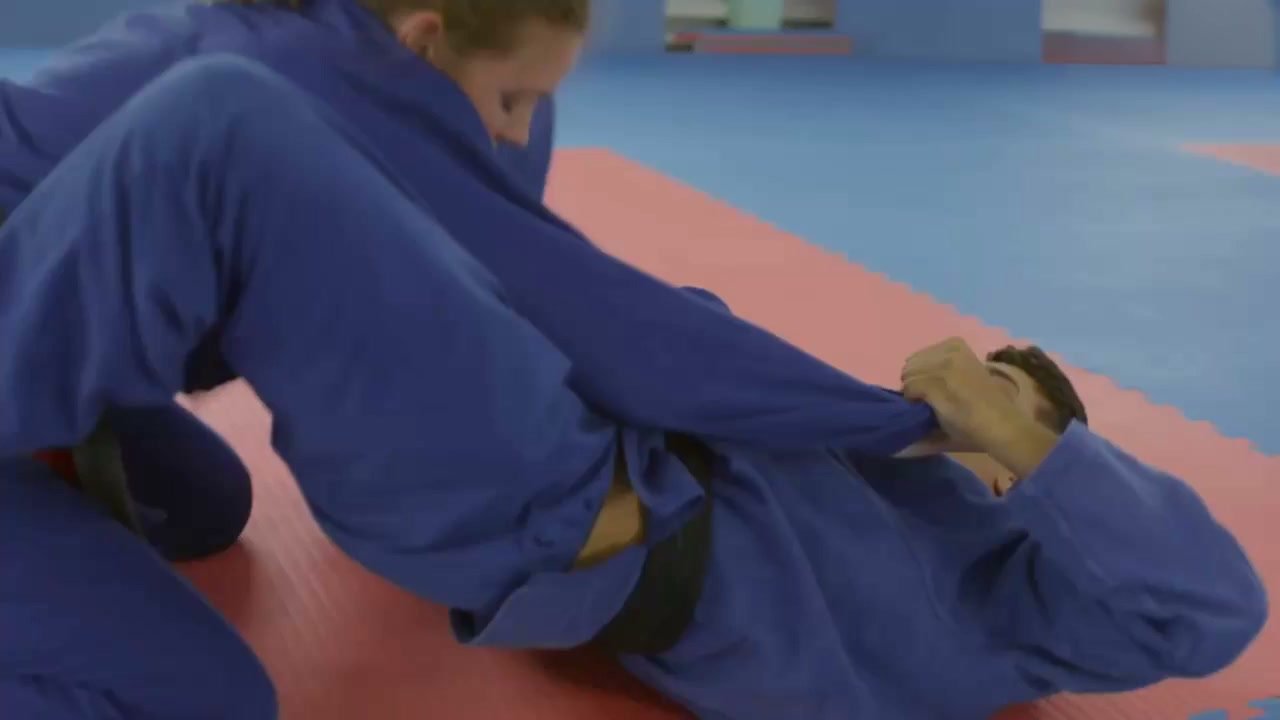
Positional sparring is the highest-leverage training tool in BJJ, and most gyms run it badly or not at all. This guide is the operational manual: what positional sparring actually is, four round formats that work, how long rounds should be at each belt level, twelve starting positions with clear win conditions, and how to run all of it with a full class without the whole thing dissolving into free rolling after ninety seconds.
No theory padding. You can take this to the mats tonight.
What Positional Sparring Is (and Why It Beats Free Rolling for Skill Acquisition)
Positional sparring means starting a live round from a fixed position — mount, back control, half guard — with defined win conditions and a reset when someone wins. Full resistance, narrow scope. It sits between drilling (cooperative, no resistance) and free rolling (full resistance, no focus).
Why it works better than free rolling for actually getting good: reps in the positions that matter. In a six-minute free roll, you might spend forty seconds in mount. In six minutes of mount-only positional rounds, you get six minutes of mount — every escape attempt, every retention adjustment, every submission entry, against a resisting person. You're compressing months of incidental exposure into one session.
This isn't bro science. It's the core logic of constraint-led coaching from ecological dynamics — the motor learning framework behind the "ecological approach" that coaches like Greg Souders have popularized in grappling. The idea: skills develop fastest when athletes solve live problems under constraints that funnel them toward the target skill, rather than rehearsing dead-pattern techniques and hoping they transfer. You don't need to buy the whole ecological philosophy to use the tool. Positional sparring is a constraint: it forces the problem you want solved to actually occur, at full resistance, dozens of times per session. Free rolling leaves skill exposure to chance. Positional sparring schedules it.
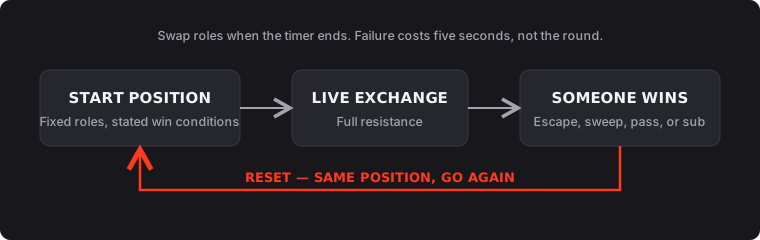
The other underrated benefit: it fixes the intensity problem. Nobody panics and hips out at 100% for a whole class when the stakes are "we reset and go again." People take risks, try the escape they're bad at, and actually learn — because failure costs five seconds, not the whole round.
Four Round Formats That Work
1. Reset-on-Success
The default format. Two partners start in the position. Each has a win condition (escape, sweep, submit, pass — see the position list below). When either player wins, reset to the same starting position, same roles. Swap roles when the timer ends.
Best for: technical development, all levels. This is the format you should be running most of the time. Nobody rests, nobody coasts, and the person losing gets the most reps.
2. Winner-Stays (King of the Hill)
One player holds the position (say, top mount) against a line of challengers. Win your exchange, you stay in. Lose, you go to the back of the line. Classic version: "passers stay" or "guard players stay."
Best for: competition prep and conditioning. It rewards efficiency — the person holding the hill learns to win exchanges without burning out. Warning: the line spends a lot of time standing around. Cap lines at 4-5 people or run multiple hills.
3. Escape-or-Submit
Asymmetric stakes: top player must submit, bottom player must escape to a neutral position. No points, no stalling reward — holding the position without advancing counts as losing for the top player. Run it from dominant positions: mount, back, side control, knee on belly.
Best for: killing the stall-and-hold habit. Purple belts who "win" side control by lying there for five minutes hate this format, which is exactly why they need it.
4. Shark Tank
One player stays in for an extended block (4-10 minutes) while fresh opponents rotate in every 60-90 seconds, starting from a set position each time. The shark fights exhausted; the challengers fight fresh.
Best for: competitors in fight camp, belt promotions, and occasionally humbling someone. Not a weekly tool — it trains grit and decision-making under fatigue, not new skills. Use sparingly.
Timer Recommendations by Format and Belt
Short rounds with frequent resets beat long rounds. The reset is where the learning consolidates — long rounds just turn into free rolling with extra steps.
- Reset-on-success: 3 minutes per role (6 total per pair), swap roles at the bell. White belts: drop to 2-minute roles so fatigue doesn't swamp technique. Brown/black: 4-5 minute roles are fine.
- Winner-stays: No timer on exchanges — the win condition is the timer. Cap the whole station at 8-10 minutes, then rotate positions. If an exchange passes 90 seconds with no progress, reset both players anyway.
- Escape-or-submit: 2 minutes per exchange. If nobody wins in 2 minutes, the bottom player takes the "win" (this pressures the top player to advance). All belts.
- Shark tank: 60-second waves for white/blue sharks, 90-second waves for purple and up. Total shark time: 4 minutes (white), 6 (blue/purple), 8-10 (brown/black in fight camp).
- Rest: Almost none needed between resets — that's the point. Between full role-swaps or position changes, 30-60 seconds is plenty.
The 12 Starting Positions
Each entry: what the position trains, and the win condition for each player. Winning means achieving your condition; then reset.
1. Closed Guard
The fundamental bottom-versus-top problem: posture and grips against attacks and sweeps. Bottom wins by sweeping or submitting; top wins by opening the guard and passing to side control.
2. Mount (Top/Bottom)
Trains pressure, base, and attack chains for the top player; frames, bridges, and elbow escapes for the bottom. Top wins by submission (or advancing to back mount); bottom wins by escaping to guard or a neutral position.
3. Back Control
The highest-value position in the sport, so give it the most reps. Attacker wins by submission; defender wins by clearing the hooks and escaping to a face-to-face position.
4. Side Control
Trains crossface pressure and transitions on top, frame-and-shrimp fundamentals on bottom. Top wins by submitting or advancing to mount; bottom wins by recovering guard or getting to knees/turtle and out.
5. Half Guard
The position everyone passes through and nobody trains deliberately. Bottom wins by sweeping, taking the back, or recovering full guard; top wins by passing to side control or mount.
6. Knee on Belly
Trains mobility and reaction speed — the top player attacks off the defender's panic, the bottom player learns to escape without giving up an armbar. Top wins by submission or advancing to mount; bottom wins by recovering guard.
7. North-South
An awkward position most people only visit by accident, which is exactly why it works as a constraint. Top wins by submission (kimura, north-south choke) or transition to mount; bottom wins by recovering guard or escaping to turtle and out.
8. Turtle (Attacker on Top)
Trains back-taking mechanics for the attacker and granby rolls, sit-outs, and guard recovery for the turtled player. Attacker wins by taking the back with hooks or submitting; defender wins by recovering guard or standing up to neutral.
9. Open Guard (Seated) vs Standing Passer
The modern passing battle: entries, grips, and distance management. Passer wins by establishing side control or better for three seconds; guard player wins by sweeping, standing up, or entering a submission.
10. Butterfly Guard
Trains elevation, underhooks, and off-balancing at close range. Bottom wins by sweeping or submitting; top wins by flattening the hooks and passing.
11. Front Headlock
The wrestling-jiu-jitsu bridge position: guillotines, anaconda entries, and go-behinds for the attacker; hand-fighting and posture recovery for the defender. Attacker wins by submission or taking the back; defender wins by clearing the head and returning to neutral.
12. Leg Entanglement (Ashi Garami)
Non-negotiable at purple and up, valuable earlier with sensible rules (straight ankle only for white belts). Attacker wins by submission; defender wins by clearing the entanglement and passing to a top position.
If you're training in a small group or open mat without a coach calling positions, this is exactly the problem the Roll & Flow deck solves: draw a Situation card and it sets your random starting position, so nobody defaults to pulling closed guard for the fortieth session in a row. Dealing the cards replaces the planning conversation entirely.
How to Run It as a Coach With a Full Class
A working template for a 60-minute class with 20 students:
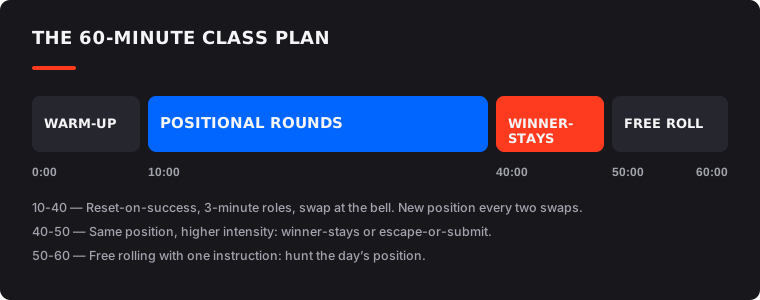
- Minutes 0-10: Warm-up plus a short technical frame — show the position of the day and the two or three key problems in it. Two minutes of talking, max.
- Minutes 10-40: Positional rounds, reset-on-success. Pair students by size first, skill second. Run 3-minute roles with role swaps, changing the starting position every two role-swaps (so each position gets 6 minutes per side of the pairing).
- Minutes 40-50: One winner-stays or escape-or-submit block from the same position to raise intensity now that everyone has reps.
- Minutes 50-60: Free rolling — but tell students to hunt the day's position. This is where the positional work transfers.
Coaching mechanics that matter:
- State win conditions out loud, every time. "Top player: submit or take the back. Bottom player: get your guard back." Ambiguity produces stalling.
- Walk the room during rounds. Your job during positional sparring is diagnosis, not spectating. One cue per pair per round, maximum — say it, move on.
- Referee the resets loosely. A "good enough" reset every ten seconds beats a perfect reset every thirty. Speed of exposure is the whole point.
- Handle odd numbers with a rotating third who swaps in at each reset — they rest one exchange, not one round.
Common Mistakes
- Letting rounds drift into free rolling. Someone escapes side control, and instead of resetting, the pair just... keeps rolling. Now it's a bad free roll. Enforce resets ruthlessly for the first month; after that the culture holds itself.
- No defined win conditions. "Start in half guard and go" is not positional sparring, it's free rolling with a themed opening. Win → reset. Every time.
- Rounds that are too long. Ten-minute positional rounds reward cardio and stalling. Short rounds, many resets.
- Always starting from the same three positions. If your gym only ever does closed guard, side control, and mount, your students will be helpless in turtle, front headlock, and every leg entanglement. Randomize.
- Mismatched pairs with symmetric goals. A 90kg blue belt versus a 60kg white belt in mount-escape is pointless for both. Fix it with asymmetric conditions: the stronger player must submit, the weaker player only has to survive the round.
- Skipping it at white belt. Some coaches treat positional sparring as an advanced tool. Backwards. White belts benefit most, because it puts them in bad positions safely and repeatedly, instead of letting them get smashed at random in free rolls.
- Zero-stakes rounds. If nothing happens when someone wins, intensity decays. The reset is the stake. Winner-stays formats add more when you need them.
Stop Planning, Start Dealing
Everything above works with a whiteboard and a coach who plans. But if you're running open mats, small-group sessions, or you're the training partner who always ends up deciding what to work on — the planning step is where good intentions die, and everyone quietly returns to pulling guard and doing the thing they're already good at.
The Roll & Flow deck ($29.99) is the shortcut: Situation cards deal you a random starting position, and Submission cards give each roller a secret submission to hunt during the round — a built-in win condition that keeps both players honest without a coach calling anything. It's positional sparring in a box, no lesson plan required. Stop drilling. Start solving.
FAQ
How long should positional sparring rounds be?
2-3 minutes per role for most formats, with instant resets after each win inside the round. White belts do better with 2-minute roles; brown and black belts can run 4-5. Longer than 5 minutes and you're rewarding stalling and cardio instead of skill.
Is positional sparring good for white belts?
It's arguably better for white belts than for anyone else. It exposes them to bad positions at full resistance in small, survivable doses, with clear goals and frequent resets — instead of the chaos of free rolling, where they mostly learn to panic. Keep roles short and win conditions simple (escape or survive).
How often should you do positional sparring versus free rolling?
A practical split is 60-70% positional, 30-40% free rolling within your live-training time. Free rolling still matters — it's where you learn to link positions together and manage pacing — but it should be the test, not the curriculum.
What's the difference between positional sparring and drilling?
Resistance. Drilling is cooperative: your partner feeds the position and lets the technique work. Positional sparring is fully live: your partner is genuinely trying to win their own condition. Drilling builds familiarity with movements; positional sparring builds the ability to execute them against someone who objects.
How much resistance should partners give in positional sparring?
Full resistance is the default — that's what separates it from drilling. The exceptions: big size or experience gaps (give the stronger player a harder win condition rather than asking them to go soft) and injury management. If a pair keeps stalemating at 100%, shorten the exchange timer rather than lowering resistance.
Related reading: 15 Open Mat Games for BJJ (That Fix Aimless Rolling) · BJJ Warm-Up Games That Aren't a Waste of Time · How to Structure a BJJ Class · Solo BJJ Drills Without a Partner · Randori vs. Positional Sparring · No-Gi Warm-Up Games · Best Games for BJJ Kids Classes · How to Stop Drilling the Same 3 Moves