
How to Stop Drilling the Same 3 Moves Every Class
Ask most blue and purple belts what they worked on last month and you'll get the same two or three setups every time. It's not laziness — it's what free rolling naturally selects for. Every roll, you get to pick your grips, your guard, your attack, and under live pressure you pick whatever's already worked before. Nobody consciously decides to stop growing; the format just quietly rewards repeating your A-game over and over.
The fix isn't more willpower. It's removing the choice.
Why This Happens
Free rolling has no built-in mechanism to force variety. If your best sweep is X/Y from De La Riva, you'll fight to get to De La Riva every single roll, because it's the position where you feel safest and most dangerous. Do that for two years and you'll have a genuinely excellent De La Riva game — and gaps everywhere you never had to visit.
This is a structural problem, not a discipline problem. You can't out-willpower a format that always lets you retreat to your comfort zone. You have to change the format.
5 Ways to Break the Pattern
1. Start From Positions You Didn't Choose
Positional sparring is the most direct fix — pick your weakest position and drill from there exclusively for a session, instead of hoping you end up there during free rolling. (Full guide: how to run positional sparring.)
2. Hunt Submissions You Don't Normally Go For
For a week, only try to finish with submissions outside your usual three. You'll fail a lot at first — that's the point. Failing at something new teaches faster than succeeding at something familiar.
3. Roll With a Handicap
Give up your dominant grip, your favorite guard, or a full limb, and force yourself to solve the roll a different way. This works especially well against lower belts, where the handicap creates a genuinely competitive roll for both people.
4. Randomize the Starting Position
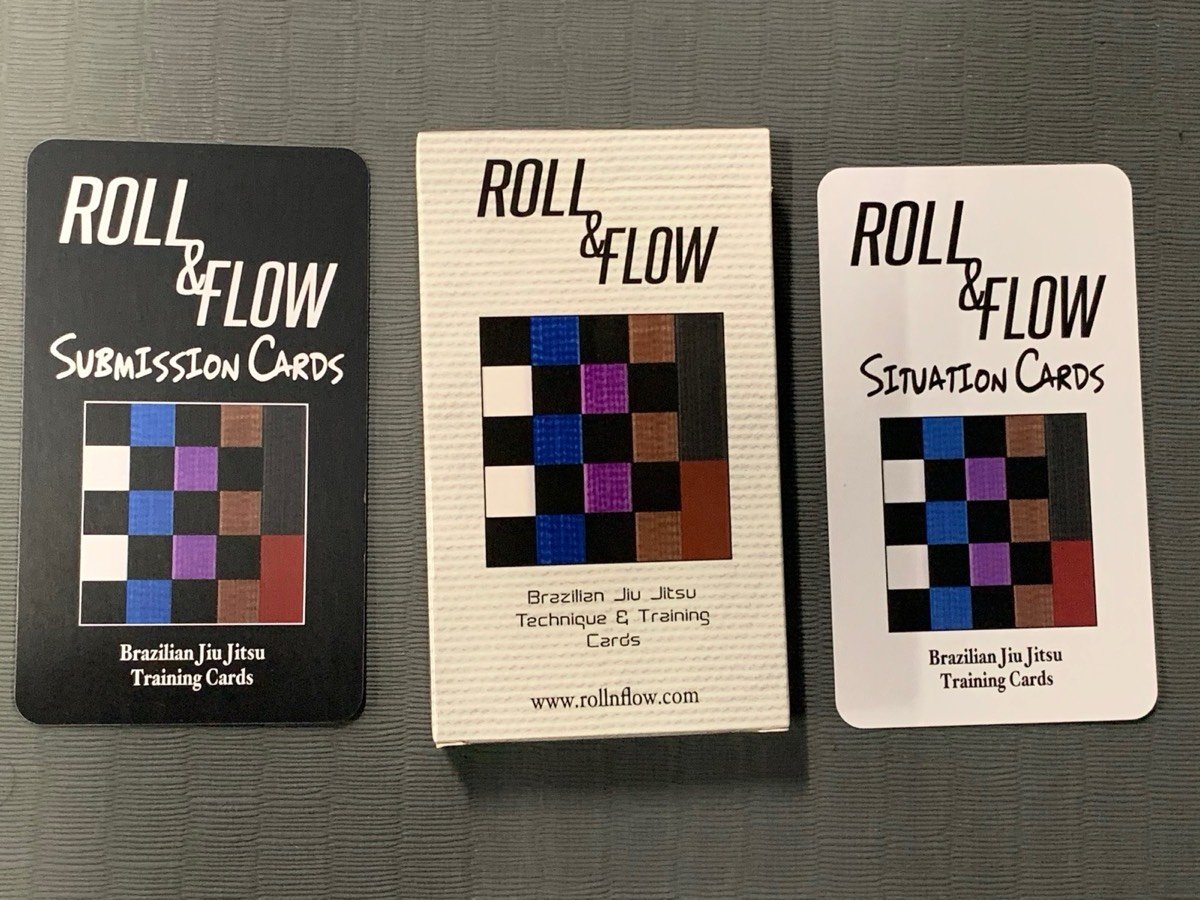
The most reliable fix for "I always end up in the same spot" is removing your ability to choose the spot at all. Draw a random starting position — from a partner calling it out, or from cards built for exactly this — and you physically cannot default to your favorite setup, because the roll didn't start there.
5. Hide the Objective
Draw or assign a secret submission target and roll normally, but you can only win by landing that specific finish. Since your partner doesn't know what you're hunting, you have to actually set it up instead of taking whatever's available — which is a different, harder skill than finishing what falls in your lap.
Why Cards Work Better Than Willpower
You could write positions and submissions on scraps of paper and draw them yourself — the mechanism matters more than the tool. What a dedicated deck adds is that it's built to run both halves of this at once: a Roll & Flow Situation card sets a starting position you didn't pick, and a Submission card gives you (or your partner) a secret objective nobody can see. Combine both and neither of you is rolling toward anything familiar — you're solving a problem the cards handed you, not the one you'd have picked yourself.
That's the entire mechanism behind fixing a plateau: stop letting yourself choose the comfortable path, and the uncomfortable reps you've been avoiding for years finally start happening.
FAQ: Breaking a BJJ Plateau
Why do I always roll the same way in BJJ?
Free rolling lets you choose your starting position and your response, and under live pressure people default to whatever's already worked before. Without an outside constraint forcing a different choice, your A-game becomes your only game.
How do you break out of a BJJ plateau?
Add constraints that remove your default options: start from positions you don't choose, hunt submissions you don't normally go for, or roll against handicaps. The goal is forcing reps in the 80% of your game you currently avoid.
Does randomizing training positions actually help BJJ?
Yes — it directly targets the mechanism behind plateaus, which is defaulting to comfortable patterns. Randomized starting positions force reps in unfamiliar spots you'd otherwise never choose to enter voluntarily.
How long does it take to fix a BJJ plateau?
Most practitioners notice a difference within a few weeks of deliberately training weak positions instead of avoiding them, though full comfort in a new position can take a few months of consistent, targeted reps.
Related reading: Randori vs. Positional Sparring · How to Run Positional Sparring · 15 Open Mat Games for BJJ