
Best Games to Keep BJJ Kids Classes Engaged
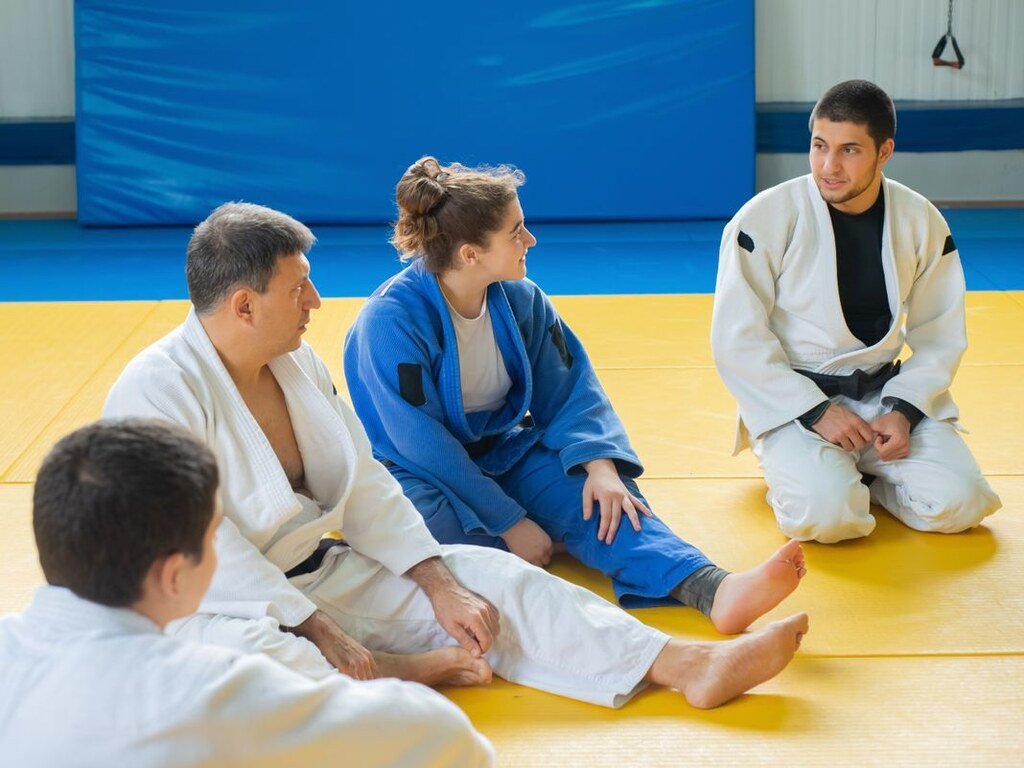
Kids don't disengage because grappling is boring — they disengage during the parts that look like a regular classroom: standing in line, listening to a long explanation, waiting for a turn. The fix isn't dumbing down the material, it's compressing the talking and maximizing the moving. These ten games teach real BJJ fundamentals — base, escapes, control — while keeping a room of 6-to-10-year-olds too busy to get restless.
Movement & Base Games
1. Animal Walks Relay
Ages: 4-8. Bear crawl, crab walk, and frog jump down the mat in a relay race between teams.
Trains: the base movement patterns BJJ depends on, disguised as a race so nobody notices it's conditioning.
2. Balance Island
Players: 2, or run as a group. Both kids kneel facing each other and try to push, pull, or off-balance the other onto their hands, without grabbing clothing aggressively — just hand pushes and light grips.
Trains: base and balance, the foundation under every takedown and sweep, in a form that's safe and genuinely fun for young kids.
3. Freeze Tag Sprawl
Players: Group. Regular tag, but when tagged, the kid must sprawl flat on the mat and can only be "unfrozen" by a teammate tapping their back.
Trains: the sprawl reaction, reinforced through pure repetition without ever calling it a drill.
Escape & Control Games
4. Sharks and Minnows (Guard Version)
Players: Group. A few "sharks" hold bottom guard position in the middle of the mat; "minnows" try to crawl past without getting tagged by a shark's hands. Tagged minnows become sharks.
Trains: spatial awareness and guard mechanics in a chase-game format kids already understand intuitively.
5. Escape the Blanket
Players: 2. One kid lies on their back while the partner holds light chest-to-chest control (a very soft mount or side control). The bottom kid's job is to escape using hip movement, not strength.
Trains: the earliest version of bottom escapes — bridge, hip escape — taught through play instead of technical instruction.
6. Red Light, Green Light: Guard Pass
Players: 2 or group. On "green light," the top kid tries to pass to a control position; on "red light," everyone freezes. First to a clean pass wins the round.
Trains: guard passing basics with built-in pacing, so kids don't just flail at full speed the entire time.
Rules & Randomizer Games
7. Simon Says: Grappling Positions
Players: Group. Call out positions — "Simon says base position," "Simon says turtle" — and kids move into the shape. Skip the "Simon says" prefix occasionally to catch people out, just like the classic game.
Trains: position recognition and the shapes themselves, reinforced through repetition without a single live round.
8. Musical Positions
Players: Group. Kids move around the mat while music plays; when it stops, they freeze in a position called out beforehand (turtle, base, bridge). Last to get there correctly sits out one round.
Trains: the same position recognition as Simon Says, with a different game wrapper to keep the format fresh across weeks.
9. Card Draw Positions
Players: Group, coach-led. Draw a Situation card from a Roll & Flow deck and have the whole class set up in that position with a partner for a short, controlled movement round — no submissions, just holding and moving in the shape.
Trains: position variety without the coach having to think up a new one every week, and the randomness itself keeps kids curious about what comes next.
10. Belt Tag Tournament
Players: Group. Kids tuck a belt or rolled-up sock into their waistband; the goal is to grab an opponent's without losing your own. Last kid with their belt wins.
Trains: grip fighting and awareness in a format kids will ask to play every single class.
Running a Kids Class That Doesn't Lose the Room
- Keep instructions under two minutes. Show, don't explain — demonstrate the game once and let them start.
- Rotate games every 4-6 minutes. Young attention spans reset fast; a new activity beats trying to run one drill longer.
- Build in a randomizer. Games with an element of chance (cards, dice, "Simon says") hold interest longer than fixed repetition.
- Praise effort, not just winning. Kids games work best when losing a round doesn't feel like the point.
None of these need special equipment beyond what most gyms already have. A deck built for randomizing positions — like Roll & Flow — just makes it easier to keep the variety going without having to plan a new game every single week.
FAQ: Kids BJJ Classes
How do you keep kids engaged in a BJJ class?
Keep instruction short (under 2 minutes at a time), move into a game or activity quickly, and rotate partners or stations often. Kids disengage fastest during standing-and-listening time, not during activity.
What age can kids start BJJ games?
Most kids programs start around age 4-5 with movement-based games, and introduce more structured positional games and light rolling around age 7-8 as attention span and body control develop.
How long should a kids BJJ class be?
30-45 minutes is typical for younger kids (under 8); older kids classes can run 45-60 minutes. Shorter, higher-energy sessions hold attention better than a scaled-down adult class length.
Should kids do live rolling in BJJ?
Light, supervised positional rolling is common once kids have basic control and safety awareness, usually introduced gradually rather than all at once. Full free rolling is typically reserved for older kids with more mat experience.
Related reading: BJJ Warm-Up Games That Aren't a Waste of Time · How to Structure a BJJ Class · 15 Open Mat Games for BJJ · How to Stop Drilling the Same 3 Moves