
BJJ Warm-Up Games That Aren't a Waste of Time
Most BJJ warm-ups are five minutes of jogging laps and jumping jacks — generic cardio that has nothing to do with grappling. It burns time without preparing anyone's body or brain for what's coming. A real warm-up should rehearse the actual movements of BJJ (hip escapes, stand-ups, grip fighting) so students walk into technique already warm in the joints and ranges they're about to use.
None of the games below need equipment beyond a timer, and most take less than five minutes to run. Mix a movement drill with a partner game and you've got a warm-up that actually earns its spot on the schedule.
Movement Warm-Ups (Solo or Group)
1. Hip Escape Gauntlet
Players: Any number, solo-friendly. Line up across the mat and shrimp (hip escape) the full length, alternating sides every rep. Add a second pass going forward on hands and knees to mix in base and posture.
Trains: the single most-used defensive movement in BJJ — everyone escapes bottom position with hip escapes, so everyone should drill them daily.
Intensity: low to moderate. Great as the very first thing you run, before bodies are warm.
2. Technical Stand-Up Relay
Players: Any number. Start seated, technical stand-up (post on one hand, opposite foot forward, stand without turning your back), sprint or shuffle a few steps, drop back to seated, repeat down the mat.
Trains: the stand-up everyone needs for getting off the bottom in self-defense and no-gi scrambles, reinforced until it's automatic.
Intensity: moderate. Doubles as a light cardio burst.
3. Bear Crawl / Crab Walk Ladder
Players: Any number. Bear crawl down the mat, crab walk back. Add a lap of forward rolls or cartwheels for students who are comfortable with them.
Trains: general grappling athleticism — shoulder stability, core control, and comfort moving on the ground in every direction, not just forward and back.
Intensity: moderate to high depending on pace. Good second or third drill once bodies are already moving.
Partner Games (Raise Heart Rate, Warm Up Grips)
4. Musical Guards
Players: Groups of 6+. Bottom players hold any guard while top players circle the room. On a whistle or clap, top players find a new partner and settle into base against whoever's closest — no time to get comfortable.
Trains: quickly reading a new opponent's frame and base, and gets everyone's heart rate up without a single hard roll.
Intensity: low to moderate. Playful enough that even nervous beginners loosen up.
5. Grip Tag
Players: 2, or pair up the whole room at once. Standing, each person tries to touch the other's lapel, sleeve, or collar (gi) or wrist/collar tie (no-gi) while avoiding being touched themselves. First to three touches wins, reset and go again.
Trains: the hand-fighting reflexes that decide who gets first grip in every real exchange — and it's genuinely fun, so nobody notices they're drilling.
Intensity: low impact, high reflex demand. Safe to run with any belt mix.
6. Mirror Movement
Players: 2. One partner leads, moving slowly through grappling positions — base, sprawl, shrimp, sit-up — while the other mirrors every movement in real time, facing them like a reflection. Switch leaders every 30-45 seconds.
Trains: body awareness and reaction speed, and it's a genuinely low-impact way to get two nervous new students paired up and moving together.
Intensity: very low. The safest partner game on this list — good for the very start of class or for injured students easing back in.
Randomized Warm-Ups (Novelty Keeps It Fresh)
Running the same three warm-up games every class gets stale fast, for you and for students. Randomizing which position or movement comes next fixes that without any extra planning — draw it instead of deciding it.
7. Position Draw (Movement Only)
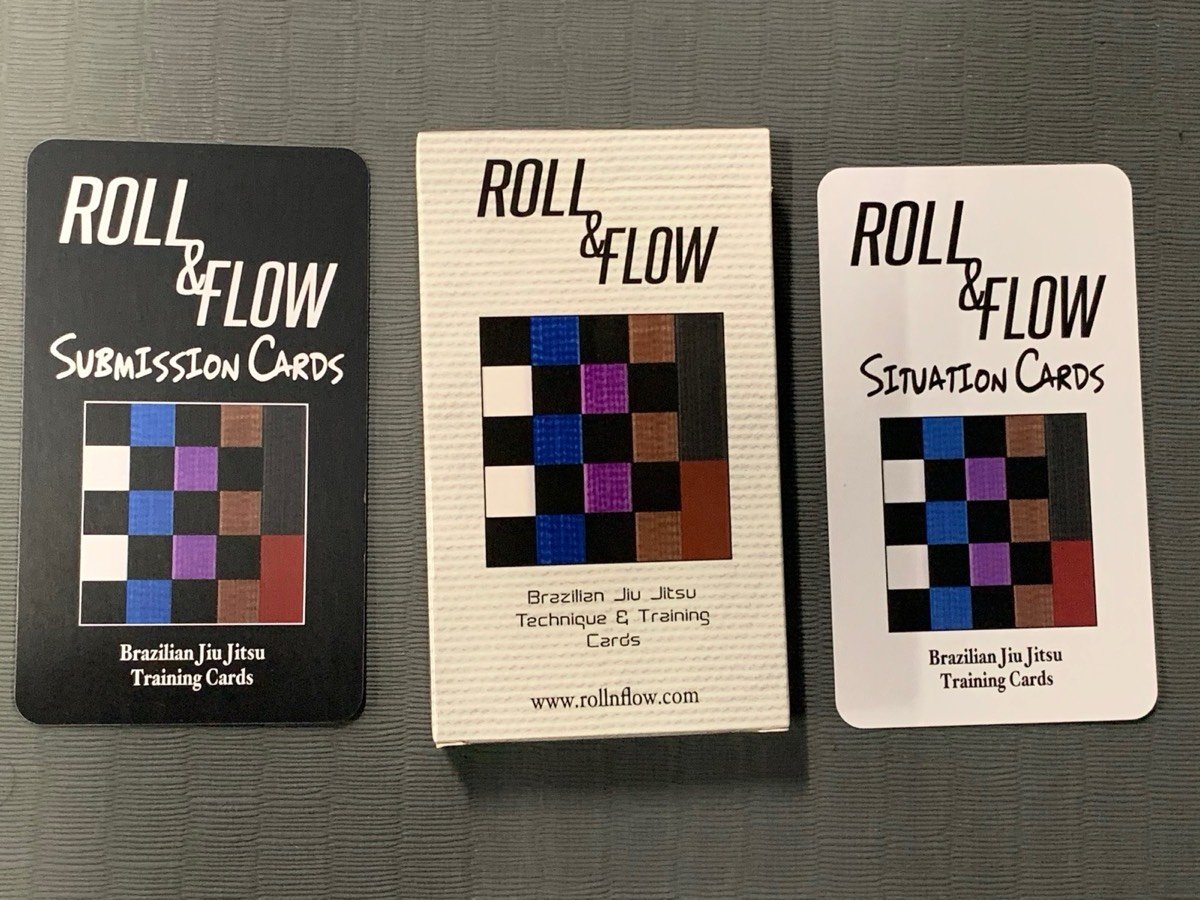
Players: 2, or run it as a rotation with a group. Draw a Situation card from a Roll & Flow deck and hold that starting position for 30 seconds of movement-only work — no submissions, no passing, just base, frames, and controlled motion from wherever the card lands you.
Trains: comfort in positions you don't usually warm up in, since left to pick your own starting spot you'll default to the same two or three every time.
Intensity: low, by design. Cap it at movement only and save full resistance for after the warm-up ends.
8. Deal the Warm-Up
Players: Any number, run as a class. Before class, assign each of the movement drills above (hip escapes, technical stand-ups, bear crawls, grip tag) to a suit or number range. Draw a card to decide which drill runs next, for however many reps the number shows.
Trains: nothing new mechanically — the value is purely in keeping warm-up unpredictable enough that students actually pay attention instead of running it on autopilot.
Intensity: matches whatever drill gets drawn. A simple way to keep a recurring warm-up from going stale.
How to Structure a Warm-Up That Doesn't Eat Class Time
- 4-5 minutes of movement — hip escapes, technical stand-ups, bear crawls. Get joints and grappling-specific ranges warm first.
- 5-8 minutes of a partner game — musical guards, grip tag, or mirror movement. This is where heart rate climbs and grips wake up.
- Rotate which games you run week to week. Repetition builds habit, but the same three games every single class is how warm-up becomes the part everyone tunes out.
- Stop before people are tired. The warm-up's job is to prepare people for class, not exhaust them before technique even starts.
A sharp warm-up sets the tone for the rest of class — and if you want the randomization built in without extra planning, a Roll & Flow deck does double duty as a warm-up randomizer and a live-rolling tool once the real training starts.
FAQ: BJJ Warm-Ups
How long should a BJJ warm-up be?
10-15 minutes is enough for most classes: 4-5 minutes of movement prep, 5-8 minutes of partner games, and a minute to catch your breath before technique starts. Longer than that and you're eating into mat time students actually came for.
What's a good BJJ warm-up routine?
Start with grappling-specific movement — hip escapes, technical stand-ups, bear crawls — instead of generic cardio like jogging laps. Follow it with a partner game that raises heart rate and gets grips warm, like grip tag or musical guards, then move straight into technique or drilling while everyone's still warm.
Should BJJ warm-ups include live rolling?
Not full-intensity rolling — save that for the end of class. Light, constrained partner games (musical guards, mirror movement, grip tag) raise heart rate and rehearse real grappling positions without the fatigue cost of live rolling before technique.
Are dynamic stretches necessary before BJJ?
Dynamic movement matters more than static stretching. Hip escapes, technical stand-ups, and bear crawls warm up the exact ranges of motion BJJ uses, which does more for injury prevention and readiness than holding a hamstring stretch for 30 seconds.
How do you warm up for BJJ without a partner?
Movement-based warm-ups don't need a partner: hip escape gauntlets, technical stand-up reps, and bear crawls all work solo. If you're warming up alone before open mat, add shadow movement — mimicking a guard pass or submission entry in the air — to rehearse timing, not just mobility.
Related reading: 15 Open Mat Games for BJJ (That Fix Aimless Rolling) · How to Run Positional Sparring · How to Structure a BJJ Class · Solo BJJ Drills Without a Partner · Randori vs. Positional Sparring · No-Gi Warm-Up Games · Best Games for BJJ Kids Classes · How to Stop Drilling the Same 3 Moves